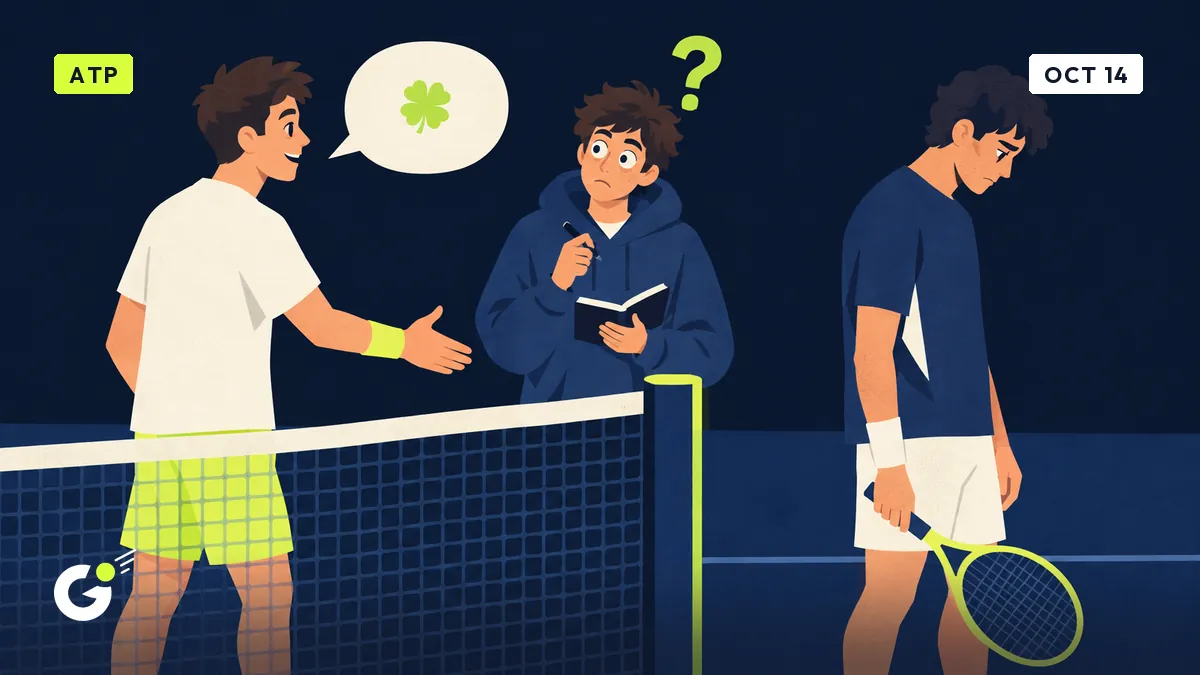
Alexander Zverev beat Alexander Bublik 7-6, 4-6, 7-6 in the last 16 in Shanghai. More than 40 aces between them. I read the We Love Tennis report on the 7:32 train, between Louvain-la-Neuve and the newsroom, and I got stuck on one line. After match point, at the net, Zverev said to Bublik: “Good luck.”
Silly question, but good luck for what?
The match was over. There was no point left to play, no set, nothing. In football, you swap shirts. Here, you wish each other good luck at the exact moment when luck can no longer be of any use. I wrote down three theories in my notebook. One: good luck for the next tournament. Two: good luck for the flight. Three: it’s the official formula, like “à tantôt”, which people say without naming a time.
And then there is the reply. According to We Love Tennis, Bublik told his opponent that he’d had enough and that he no longer wanted to play tennis. He said: “I don’t want to carry on any more. I’m not going to play. What’s the point if I don’t win? No, I don’t want to.” So one wishes the other good luck, and the other answers that he doesn’t plan to need any. It’s the shortest and most complete conversation I’ve read since I started my internship.
I held out my notebook to Céline, please, for an insider’s opinion.
At the net, you always say something. Me, I say ‘well played’ even when it wasn’t well played. It’s the code.
I asked whether the code covers what to answer when the other person says they’re quitting. She looked at her mobile. I’m still waiting.
Anyway, I still have a lot to learn.
It’s true, we checked: We Love Tennis.