Silly question, but: whose job is it to tell the player?
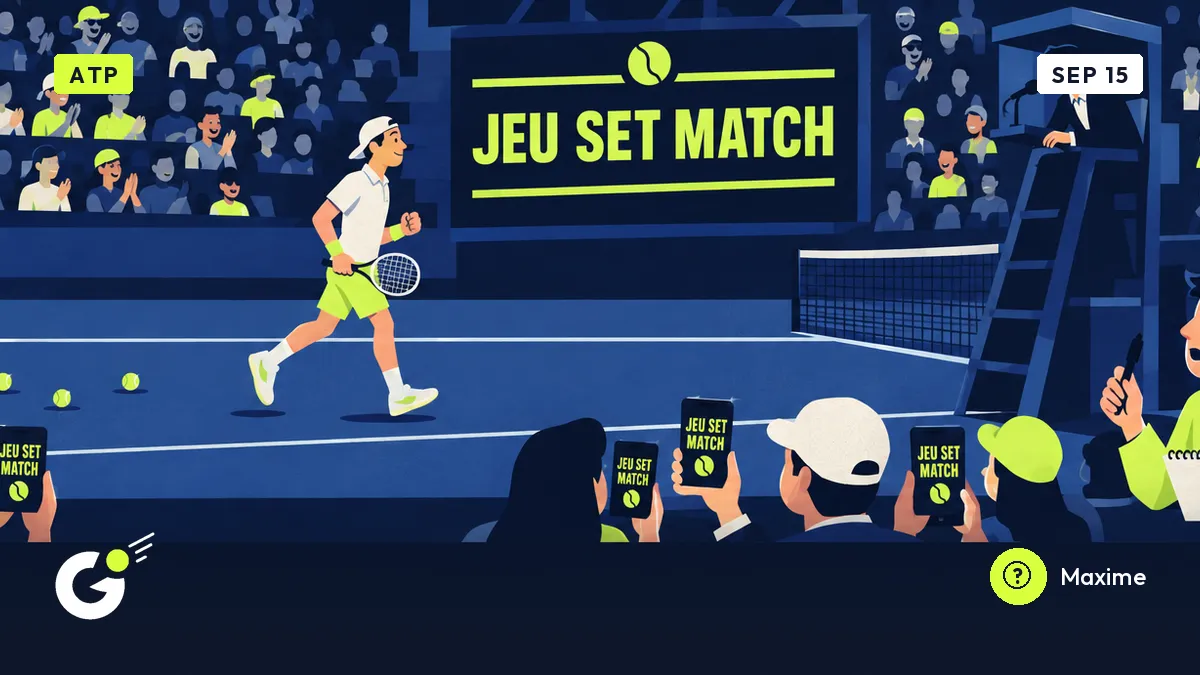
Alexander Zverev served, the point ended in his favour, he dropped his spare balls and walked over to take up his return position. As far as he was concerned, the match was still going. It took the umpire saying « Game, Set and Match, Zverev » for him to find out he had just won his second Grand Slam title.
I spent the morning on this.
The score is on the stadium screen, on the TV graphic, on the tournament website and on the phone of everyone in the stands. The only person who has to keep it in his head is the man playing. I asked three people why. I’m told it’s tradition, fine, but what does that mean?
On ESPN, Zverev gave his version: at the decisive point, he thought he was leading 5-1.
“I thought I was 5-1 up. Luckily, because if I had known, I probably would have hit three double faults instead of one,” he said.
That bit stayed with me a while. He’s saying he served better because he didn’t know what was at stake. So accurate information would have got in his way. In the other sports I barely follow, knowing where you stand is usually considered helpful.
Roland, whom I asked in the corridor, told me that in 1980 people counted out loud and that was enough.
What I take from this: in this sport, the winner can be the last person in the stadium to know. Anyway, I still have a lot to learn.
Zverev says he hit one double fault in that match. With the right score in his head, by his own account, it would have been three.
It’s true, we checked: We Love Tennis.