
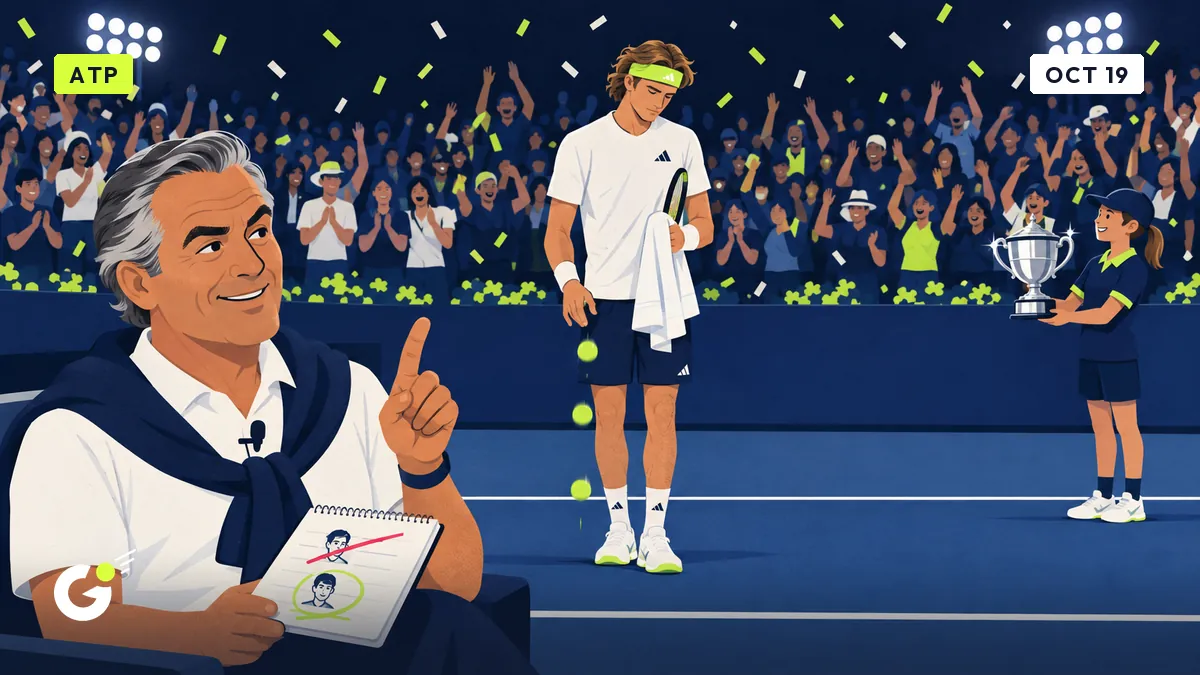
It’s very simple. Zverev won the US Open against Ben Shelton, in four sets, on 13 September, and he didn’t realise straight away that he had won. I said it back in January. Well, in January I said he wouldn’t win, but the spirit was there: a player who doesn’t know he’s winning is almost a player who’s losing, right?
And now Alex Corretja, twice a Roland-Garros finalist, explains it all to El Pais. According to him, a player who thinks before the point about the five and a half million dollars and the sponsors’ bonuses faints on the spot. Hence the rituals, like Rafael Nadal’s, “a way of shutting out everything else”, he said.
That’s exactly what I’ve been saying for years, nobody listens to me. Corretja, they ring El Pais. Me, I watch RTBF and Sporza, the Belgian broadcasters, to check they’re not quoting me, and they’re not quoting me.
Me, in Kitzbühel, in ’92, against a future top 10, I had a ritual: three bounces, the towel, and above all never think about the prize money. There was no prize money, but I didn’t think about it anyway. Result: I was perfectly focused. I lost, fine, but focused.
Careful, I’m not saying the opposite of what I said. I’m clarifying. Corretja says a ritual shuts out everything else. In my experience, a good ritual shuts out ninety percent of everything else, and I’m being kind. The remaining ten percent is the scoreboard, which is precisely the bit nobody tells you to look at.
I never know whether I’ve won either. On Sundays, nobody counts the points the same way.
The source calls Zverev the next world number one. I said that too. Well, I’m saying it now, all right?
It’s true, we checked: We Love Tennis.