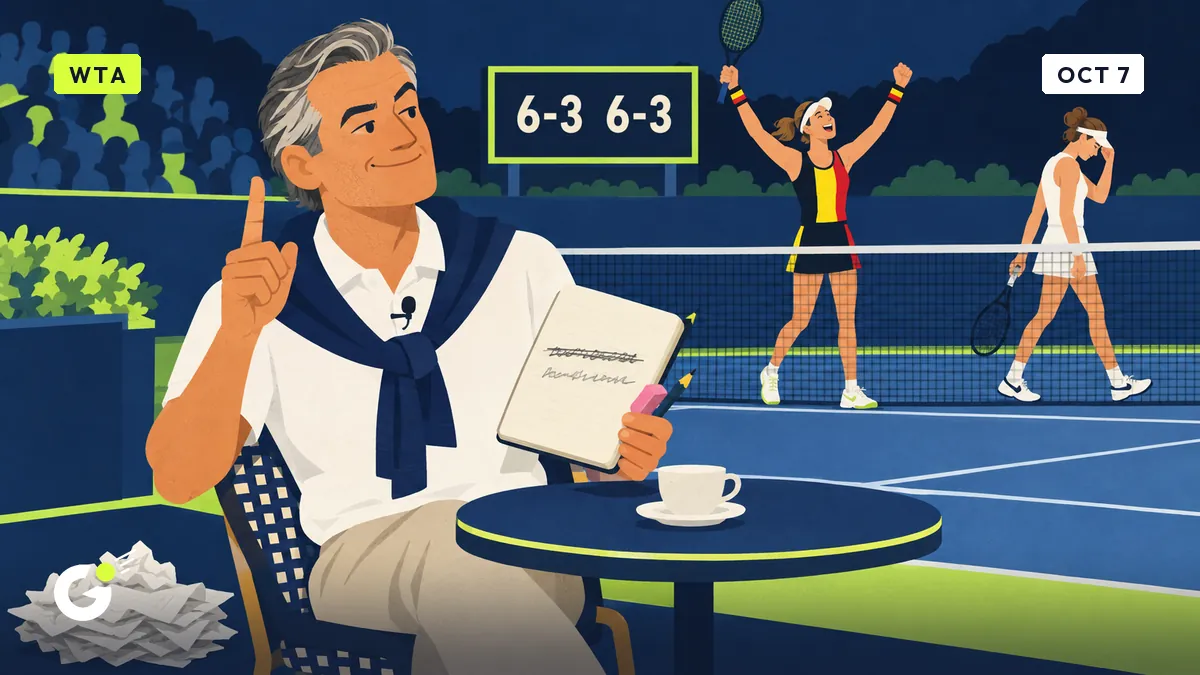
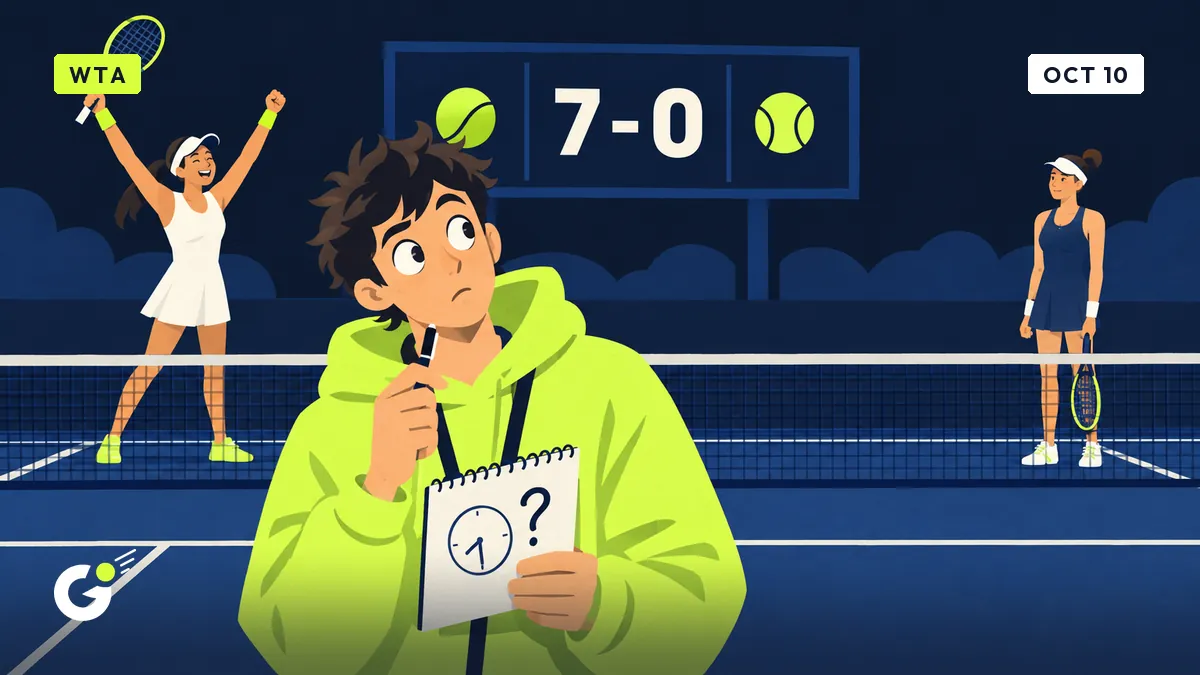
Silly question, but why is a tie-break counted 1, 2, 3 when the rest of the match is counted 15, 30, 40? Elise Mertens beat Iga Swiatek 7-6, 6-3 in Beijing on Friday, and the first set ended with a tie-break won 7-0. I was told it was historic. I asked why. Nobody on the WTA tour had ever done that to Swiatek.
So, the tie-break. It exists to separate two players who are level at 6-6. Which means that at 6-6, they were the same. Then, in a few minutes, one scores seven points and the other none. They were the same for more than an hour, because the first set lasted more than an hour, and suddenly not at all. I checked, and actually nobody can explain how you go from level to 7-0. I’m told it’s “mental strength”. Fine, but what does that mean?
Mertens gave a clue: “I was a bit nervous at the end so I tried to stay calm. I managed it thanks to my team, who helped me a lot in those more stressful moments.” So she was nervous and she won seven points in a row. I’m nervous every morning on the 7.32 train and I have never won anything.
Another discovery: Swiatek has won six Grand Slam titles, four of them at Roland-Garros, and she had already won in Beijing. Mertens did not face a single break point. I first thought a break point was when the ball broke. It isn’t. It means Swiatek was never one point away from breaking her serve. And then there are the 33 points won out of 38 behind her first serve.
A tie-break, Maxime, it’s very simple: that’s where you see the real ones. Me, in Kitzbühel, I won them all. Almost.
On Saturday, Mertens plays two semi-finals: in singles against Zheng Qinwen, and in doubles with Diana Shnaider against Gabriela Dabrowski and Luisa Stefani. Two semi-finals on the same day. I didn’t know that was allowed. Anyway, I still have a lot to learn.
It’s true, we checked: La Libre.