Alexander Zverev has won his second Grand Slam title of the season at the US Open, beating Ben Shelton in the final, after his triumph at Roland-Garros in early June. Zverev and Carlos Alcaraz are now in London for the Laver Cup, playing for Team Europe.
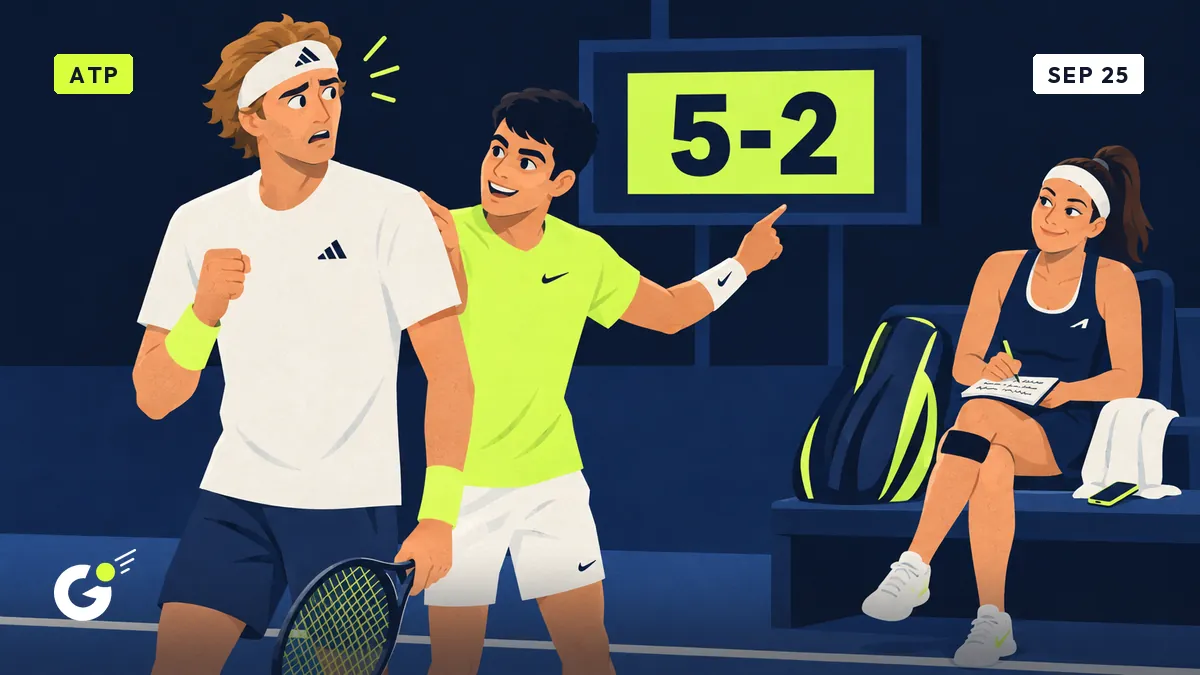
During a training session, Alcaraz used a break to ask Zverev what had been going through his head as he closed out the final. Zverev’s reply: “There was nothing in my head, that’s the advantage: when you’re an idiot, it helps!” He added: “I thought the score was 4-1, so I wasn’t stressed at all. If I’d known it was 5-2, I would have been very nervous.” The real score was indeed 5-2, and Zverev took several seconds to realise the match was over.
I know that mix-up well. Losing track of the score mid-point happens to me regularly on Sundays in club league (interclubs, Belgium’s weekend team league), especially in the third set, with the neon light on court 4 flickering. The difference is, when I think I’m leading 4-1, I’m usually leading 2-3. He got it wrong in the good direction. That, technically, you don’t learn in a Tuesday evening practice session.
Alcaraz backed the theory in his own way: “No, no, I’ve thought about it, it probably helps a lot not to know it’s the last set.” A charming exchange between the two men, filmed on the side of the practice court, that says a lot about how a champion can go through a decisive moment without fully realising it.
My season really starts in May, so I’ve never had the chance to test that on a point this important. But I’m noting the idea: stop counting the score out loud, just play. Two practice sessions away, mind you, I reckon it would work for me too.
It puts the pressure of Grand Slam finals into some perspective: sometimes, not knowing where you stand helps you move faster.
It’s true, we checked: RTBF Sport.