The final ended on an ace, 6-4, 5-7, 6-2 to Rybakina. Sabalenka went back to her team. A camera came closer. She told it, with a swear word, to go away.
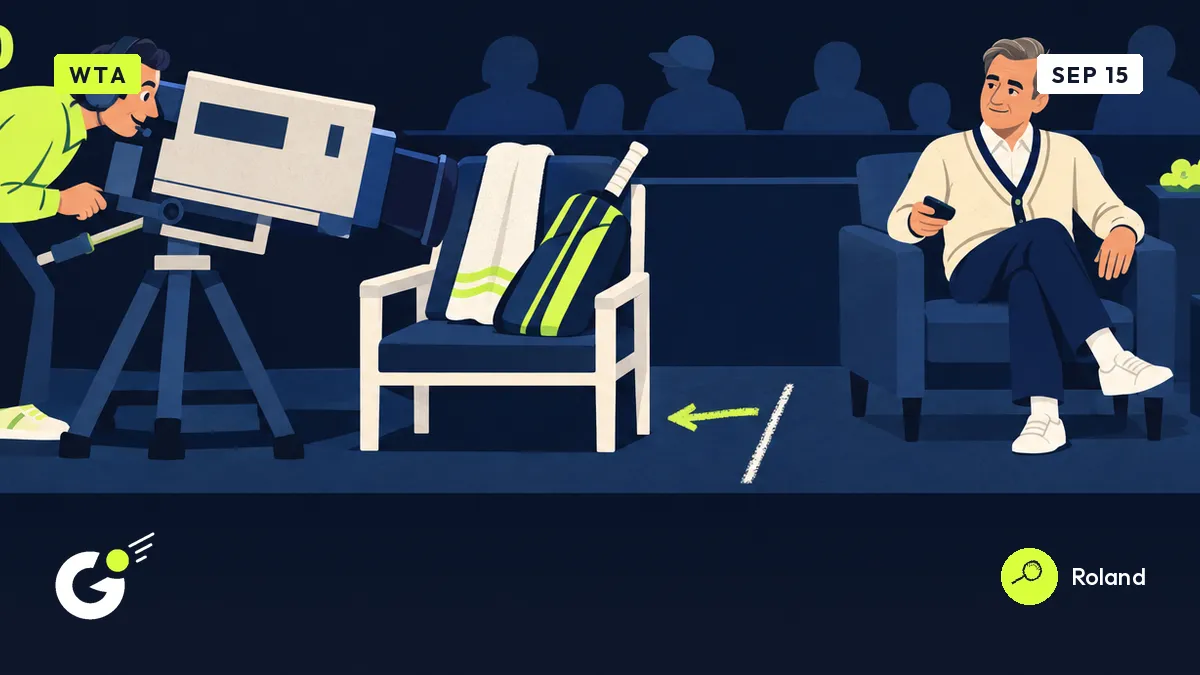
Roland watched the whole sequence without getting out of his armchair.
In 1980, the camera stayed at the edge of the court. It filmed the winner, it filmed the net, it filmed the sky if there was nothing else. It did not go down into the players’ box to collect the breathing of someone who has just lost a final. I’m not criticising. I’m comparing. We invented a job that consists of standing very close to a human being on the worst afternoon of her year, and then we are surprised when she speaks badly to him. Note that I’m not against progress. I’m against this progress. Well. It’s the times.
Sabalenka gave her own version. “It’s really tough to control your emotions when you lose in the final of the Grand Slam and when you were trying to go for three-peat,” she said, adding that keeping it all inside would have left her unable to say a word.
The day around it did not help. Twenty straight wins at Flushing Meadows, two-time defending champion, a third title in a row in sight, and a defeat in three sets. At 28, she will finish the year without a Grand Slam title for the first time since 2022. All five of her Grand Slam final defeats have come in three sets, twice after winning the opening set.
Annabel Croft talked about that first set: “she had been very negative on herself with her body language in that first set and suddenly the emotions got the better of her”.
Roland sticks to his line on the framing. “In padel there is a pane of glass, so they film through it, and everyone calls that modern. The garage wall, in 1962, did not film me.” Rybakina now has three Grand Slam titles and the world number one ranking, after Sabalenka’s 99 weeks at the top.
It’s true, we checked: BBC Sport.