Arthur Fils lost to Botic Van De Zandschulp in Shanghai, 7-5, 6-4. One break point converted out of nine. Zero out of seven in the first set. People read that as a disaster. Me, I read my match sheet from Sunday, club level.
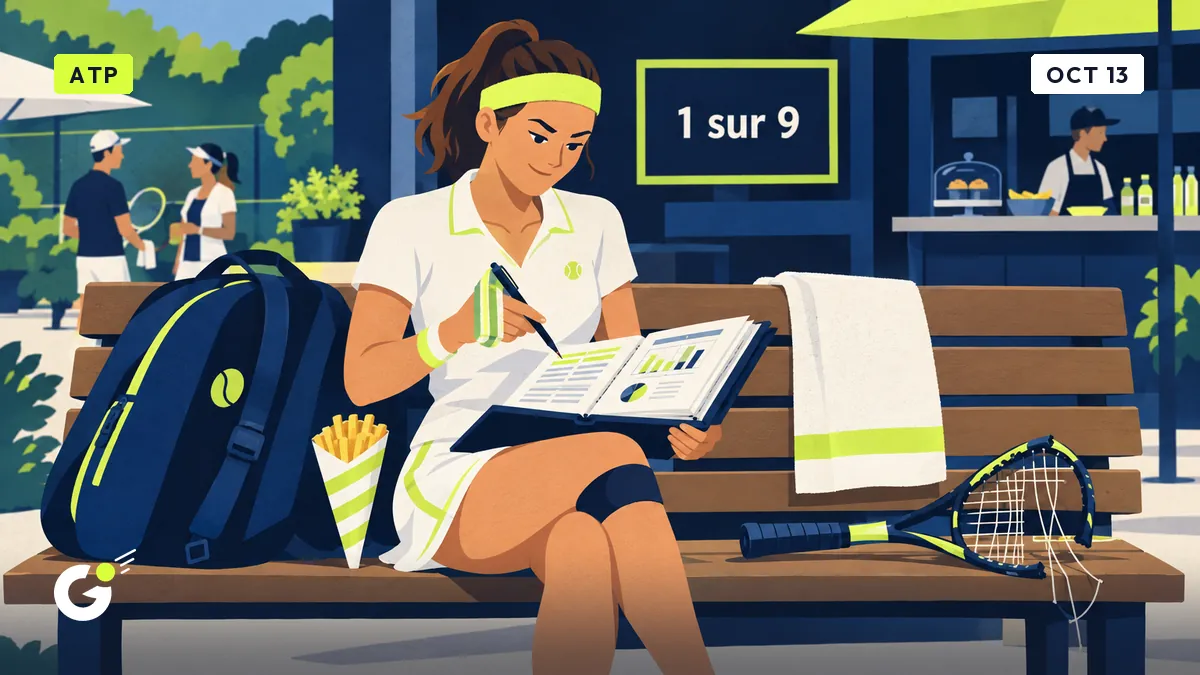
One in nine, at our club, is a first-team ratio. I opened my stats binder on the bench by the clubhouse bar, between the cone of frites and the towel: my season runs at about one in eleven, and it’s not for lack of patterns. On break point, I have a clear intention. It goes out, but it’s clear.
What interests me is the racket. He loses his serve at 5-5 and smashes it on the ground. Technically, the timing is right: you don’t break it at 4-5, you haven’t lost anything yet, and you don’t break it at 5-7, it’s too late for it to be useful. At 5-5, the set is still playable with a fresh racket, strung the same. That’s equipment management. I have one correctly strung racket, so I keep my tension to myself, and it shows in my game.
Afterwards, he told L’Équipe: “There’s quite a bit of tension, I’m trying to release the tension. I still have break points and it’s not going through.” Tension. He’s talking about the match. I hear stringing. And I think we’re saying the same thing.
In the second set, he changed his T-shirt and his wristbands “to start again”. He broke back. He says he played a very bad game at 3-3. That very bad game at 3-3, I play it. Not every time, but I play it.
Céline, in Kitzbühel, I changed wristbands at every changeover. Ninety per cent of the breaks, and I’m being kind.
He’s world No. 10. This Sunday, I’m changing wristbands at 3-3, just to see.
It’s true, we checked: We Love Tennis.