
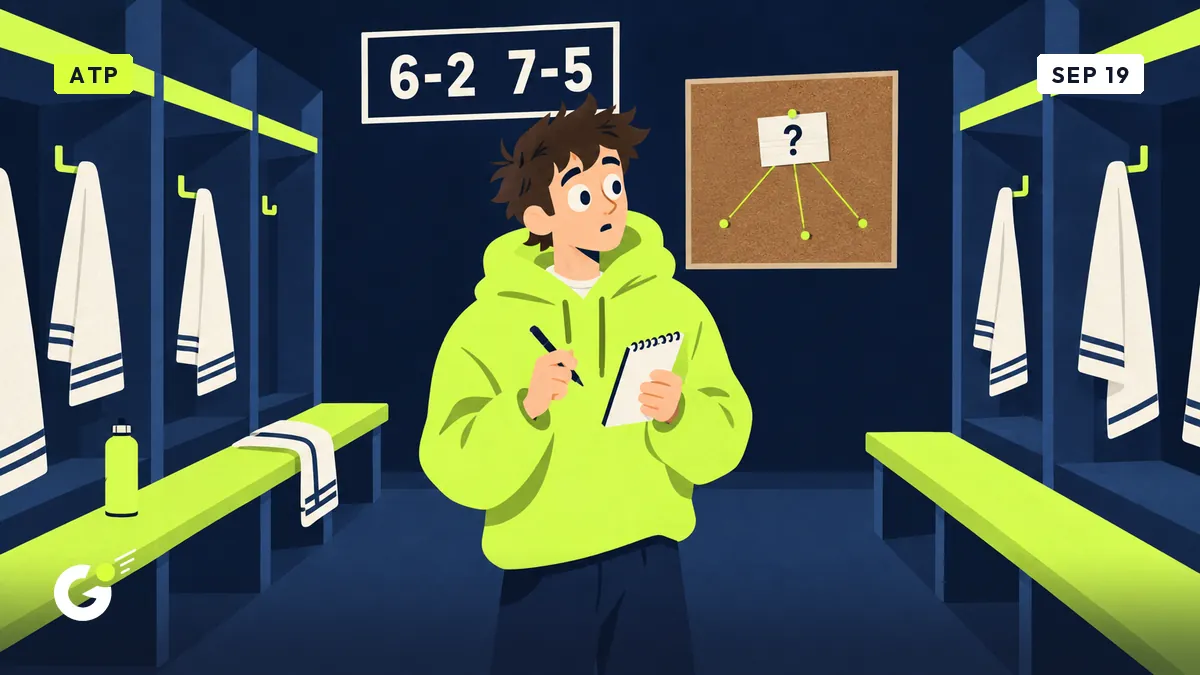
Arthur Rinderknech lost 6-2, 7-5 to Liam Draxl. After the match he said: “I wasn’t necessarily expecting that, it’s not what I’d heard or understood…” And he stopped there.
Silly question, but: heard where? I read the sentence four times on the 7.32 train. A professional player arrives at a match carrying a sentence about his opponent, and somebody, somewhere, said that sentence first. It’s that somebody I’m looking for.
I asked around the newsroom who briefs the players. Nobody could tell me. I asked whether the people who brief them are sometimes wrong. At that point I was offered a coffee.
I’m told that’s how it has always worked, fine, but still: nobody writes any of it down. There is no document. There is a sentence someone said to someone else, and it travels, and one day it loses 6-2, 7-5.
What surprises me is that nobody around me finds this odd. L’Équipe writes that Rinderknech looked surprised by his opponent’s game. That part I understand perfectly. I’d be surprised too if someone described a person to me and the person then did something else.
Back in my kot (student digs), when someone tells me a film is good and it isn’t, I know who to take it up with. Here the sentence stops at “heard or understood”, and we’ll never know who heard, or who understood it wrong. I checked, and apparently that’s fine. Anyway, I still have a lot to learn.
Right, it’s very simple: a tip-off is something you check yourself. Ninety per cent of nasty surprises come from that, and I’m being kind.
Rinderknech didn’t want to expand. The score does that for him: 6-2, 7-5.
It’s true, we checked: L'Équipe.